
Top tools
Clamps
The clamps we'd buy first: a one-handed bar clamp for beginners, then pipe clamps and parallel clamps for bigger glue-ups. Picked from independent tests, maker specs and store review counts.
Our picks
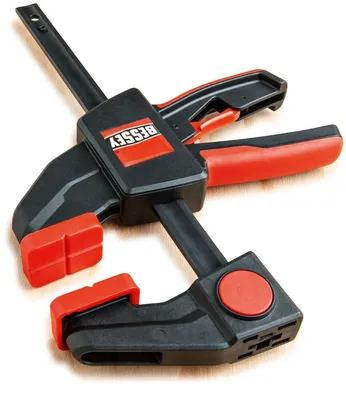
One-handed bar clamp
Bessey EHK trigger clamp, 24 in., 300 lb class
A one-handed clamp is the one you'll grab most: it holds a part to the bench, a fence to a tool, or a joint while you drive a screw, and you can set it with one hand while the other holds the work.
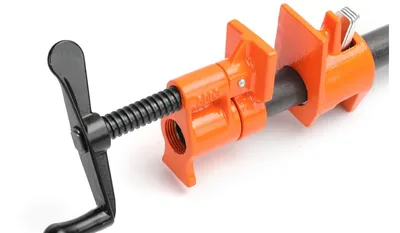
Pipe clamp
Pony 3/4 in. pipe clamp fixture
Pipe clamps are a low-cost way to get long, strong clamps for panels and carcases. You buy the fixtures once and screw them onto whatever length of 3/4 in. black pipe the job needs.
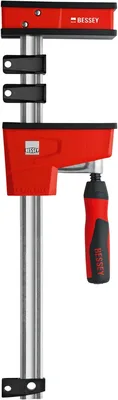
Parallel clamp
Bessey K Body REVOlution parallel clamp, 24 in.
Parallel clamps have big, flat jaws that stay square to the bar, so a cabinet or drawer box comes out square and a panel stays flat. They're the upgrade once you're building furniture.
Product images are from each maker’s product pages and are shown only to identify the products. The makers haven’t reviewed, sponsored or endorsed this page. If you own an image here and want it removed, email hello@sawdustsmart.com.
Photo credits
- Bessey EHK trigger clamp, 24 in., 300 lb class: Image: Bessey product image
- Pony 3/4 in. pipe clamp fixture: Image: Pony product image
- Bessey KRE series clamp: Image: Bessey product image
What to look for in a clamp
- Reach first. Capacity is the widest thing the clamp can close on; throat depth is how far in from the edge it can press. Buy for the work you actually do: 12 in. and 24 in. cover most small projects, and pipe clamps cover anything longer.
- Screw or squeeze. One-handed clamps are fast but limited by your grip. For glue-ups that need real pressure, use a screw-driven clamp (F-style, pipe or parallel).
- Stiff bar, square jaws. A bar that bends or jaws that tilt under pressure pull a glue-up out of flat or out of square. That’s what the independent tests above measured, and why parallel clamps cost more.
- Pads that protect the work. Plastic pads or scrap blocks keep the jaws from denting the wood.
- Enough of them. A panel glue-up needs clamps spaced evenly along the joint, alternating above and below (our glue-up guide explains the spacing). Start with a pair or two and add clamps as projects call for them.
How we picked
We didn't hands-on test these. We picked them by reading independent tests, reviews and guides (Fine Woodworking, Wood Magazine, Canadian Woodworking, Popular Mechanics and independent YouTube testers), checking each maker's spec page, and looking at review counts at large stores. Every pick has at least three independent sources from at least two different outlets, including at least one independent test or review, plus the maker's spec page and review counts at large stores, all linked with each pick along with what each one found. We also looked for an F-style clamp pick but didn't find one with enough current independent coverage, so we've left that slot out for now. Prices, review counts and links were last checked on ; prices and stock change, so check the store before you buy.
No paid links. Every link on this page is a plain link: no affiliate codes or tracking, and no company paid or asked to be listed (disclosure). Links open in a new tab.
Some outlets we cite get review samples from tool makers; we don't use pieces a maker paid for or sponsored.
We pick tools from independent tests and reviews, not our own testing.