
Technique
Oil Finish vs Polyurethane on Furniture
When to wipe on an oil finish versus brush polyurethane on furniture: look, repairability, build time, and how it differs from food-safe board finishes.
Made in my shop
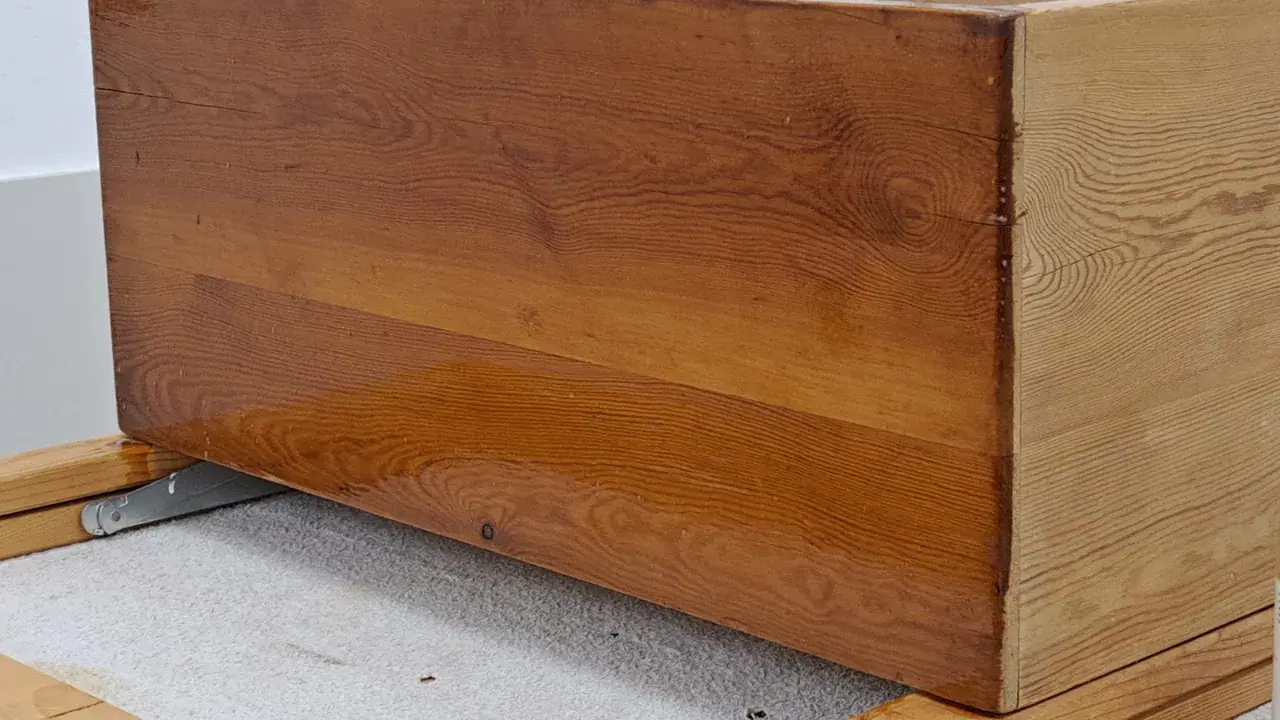
Furniture finishes usually fall into two camps: oil finishes that soak into the wood (or leave a very thin film) and polyurethane (oil-based or water-based) that builds a clear protective film on top. This tip compares those two for tables, chairs, shelves, and boxes. For food-contact boards, use finishes for cutting boards instead. For full coat-by-coat schedules, see finishing schedules.
Always follow the product label for dry and recoat times, temperature, ventilation, and respirator use. Oily rags can self-heat and catch fire: dry them flat outdoors, then store them in a sealed metal can of water.
What each finish is
Oil finishes (pure tung or linseed, Danish oil–style blends, and many wipe-on oil/varnish mixes) penetrate the surface. Some harden inside the wood; others stay soft and need renewal. The look stays close to bare wood.
Polyurethane is a film-forming varnish. Oil-based poly adds amber tone and builds slowly; water-based poly stays clearer and dries faster. Both sit on top of the wood as a hard layer you can sand between coats.
Wipe-on “poly” products are often thinned polyurethane or oil/varnish blends — read the label so you know which camp you bought.
Look and feel
| Oil finish | Polyurethane film | |
|---|---|---|
| Sheen | Natural, low to satin | Satin to gloss, more “plastic” if thick |
| Grain | Emphasizes depth; wood feels closer | Seals grain under a clear layer |
| Color | Warmth from the oil | Oil-based ambers; water-based stays pale |
| Touch | Soft, in-the-wood feel | Slicker, harder surface |
Test both on a scrap of the same species and grit before you commit.
Durability and repair
Oil finishes are easier to spot-repair: scuff, re-wipe, blend. They offer modest protection against water rings and wear — fine for shelves, frames, and low-abuse furniture, less ideal alone on a dining tabletop that sees spills every day.
Polyurethane wins for abrasion and spill resistance on tabletops and arms. Deep scratches are harder to hide; you often sand and recoat a wider area. Follow the label for full cure before hard use (often days to a week or more).
Wipe oil vs brush poly
Wipe oil (or wipe-on blend): flood or wipe on, wait briefly, wipe off all excess. Repeat thin coats. Low run risk; easy on carved or detailed parts.
Brush polyurethane: thin even coats with a quality brush, tip off along the grain, sand lightly between coats once dry. Builds faster protection; dust nibs and brush marks need more care. Water-based raises grain on the first coat — a light scuff after that coat is normal.
Surface prep is the same starting point: sand through the grits and remove dust. See sanding and finishing basics.
Furniture vs cutting boards
Cutting boards get cut, washed, and dried. Most makers prefer soak-in oils and waxes that renew easily, not a hard film knives will chip. That is a different job from furniture. Do not treat this tip as food-safe guidance — use finishes for cutting boards and the maker’s label for any board or utensil.
Related finishing tips
- Finishing schedules — shellac French polish, oil/varnish blend, and brushed varnish coat schedules
- Sanding and finishing basics — grit ladder and first-finish picks
- Finishes for cutting boards — oil vs wax for food-contact boards (not furniture film)
- How to finish small wood gifts — sanding and finishing ornaments, tags and place card holders in a batch
Pick the finish for how the piece will be used, then write the schedule down and test it on a sample board first.
Get new build ideas by email
Free build ideas and tips by email, about twice a month. We'll send a link to confirm. Our emails are sent by Kit, which tracks opens and clicks so we can see what's useful. Unsubscribe anytime. You must be 16 or older. Privacy policy.