
Shop tip
Working with Aromatic Cedar
Aromatic red cedar is soft, knotty and full of scent. Pick boards with clear heartwood, keep knots away from holes and ends, use sharp tools, and leave it unfinished where the smell matters.
Made in my shop
- Reading time
- About 2 min
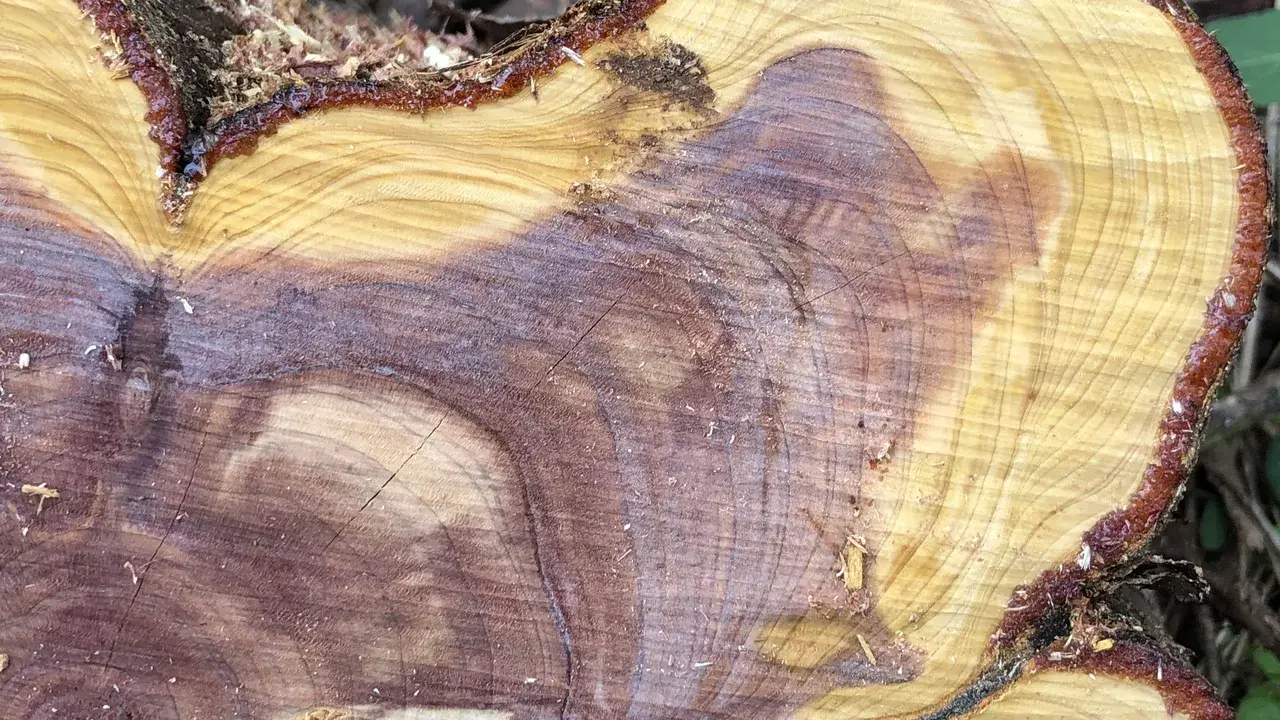
Aromatic cedar, also sold as eastern red cedar, is the purple-red wood that gives closets and sweater drawers their smell. It makes quick stocking stuffers such as drawer blocks. It is also soft, full of knots and a little different to work than oak or walnut, so a few habits help.
Pick clear heartwood
The heartwood is the purple-red center of the tree; the sapwood is the cream band outside it. The heartwood carries most of the scent and color. A streak of sapwood is fine and looks good, but pick boards that are mostly heartwood. When choosing lumber, look for the clearest boards in the stack and lay out small parts around the knots.
Keep knots away from holes and ends
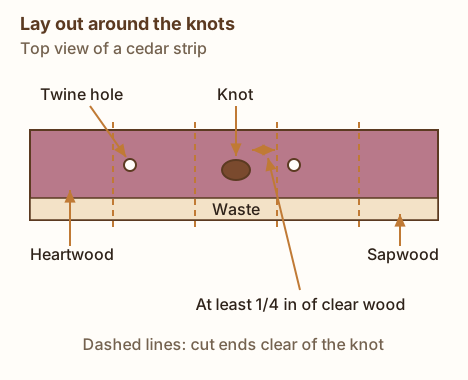
Small knots are part of the look, but a knot near an end or a drilled hole can crack or fall out. Lay out your parts so each hole has clear wood around it, at least 1/4 in from any knot, and so no knot sits right at a cut end. When a knot lands in the middle of a part, cut it out as a short piece of waste.
Swipe sideways to see the whole diagram, or tap it to open full size.
Use sharp tools and light cuts
Cedar is soft, so dull blades crush and tear it. Use a sharp saw blade, a brad-point bit for holes, and a freshly sharpened block plane set for a thin shaving. Sand by hand with 150- then 220-grit, and do not press hard, or the soft spots dish out.
Control the dust
Cedar dust can irritate skin and lungs and can cause allergic reactions over time, so wear a well-fitted dust mask and collect the dust when you cut or sand.
Leave it bare where the smell matters
Any finish seals the scent in. For drawer blocks or the inside of a small box, leave the cedar unfinished. When the smell fades after a season, sand the faces lightly with 220-grit to bring it back. If you want color on the outside of a piece, use a thin oil on the outside faces only and see our finishing tip.
Get new build ideas by email
Free build ideas and tips by email, about twice a month. We'll send a link to confirm. Our emails are sent by Kit, which tracks opens and clicks so we can see what's useful. Unsubscribe anytime. You must be 16 or older. Privacy policy.