
Shop tip
Scrap Cauls for Flat Glue-Ups
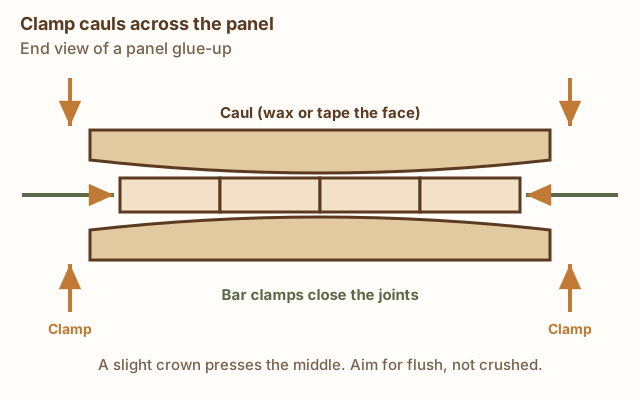
Straight scrap boards across a panel keep edges flush while clamps pull the joints closed — wax or tape them so they don't stick.
Made in my shop
- Reading time
- About 1 min
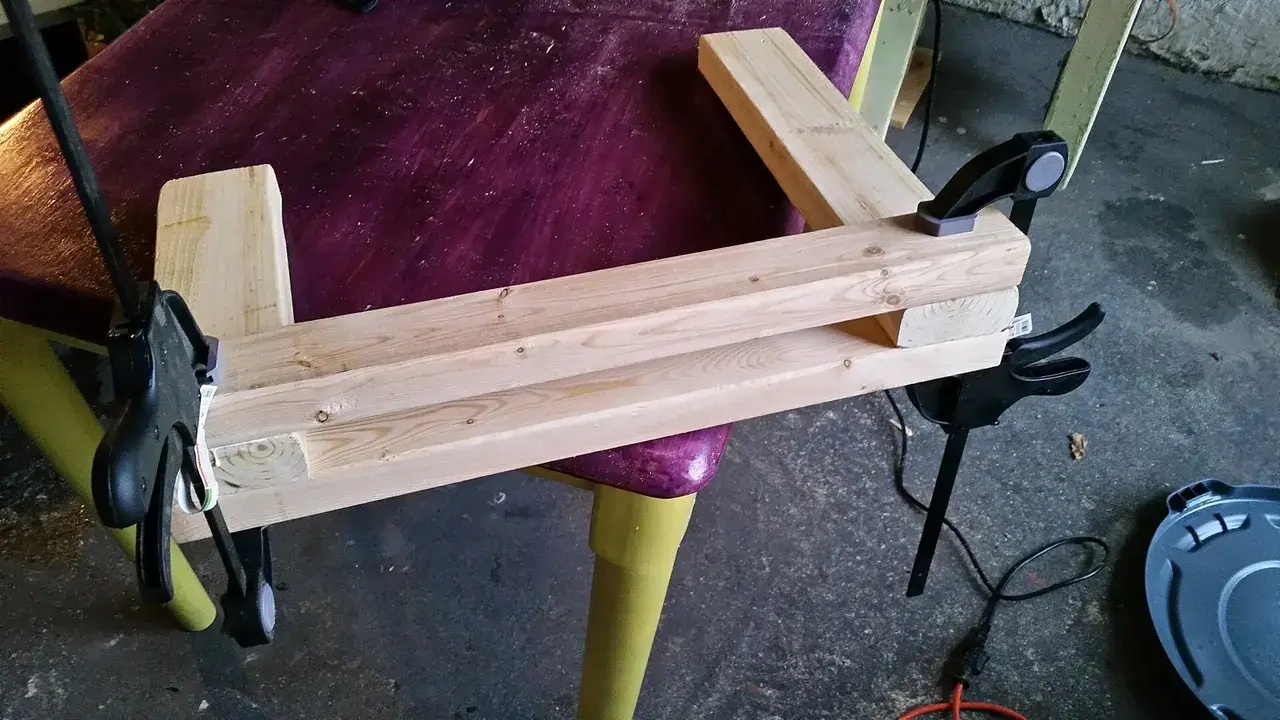
Bar clamps close a joint left-to-right. They don’t automatically keep board faces flush. A pair of straight scraps — cauls — clamped across the panel does that job.
What to use
- Straight 1x stock, plywood strips, or old decking — anything stiff and true.
- Longer than the panel is wide so clamps can reach.
- Optional: plane a slight camber (crown) on the clamping face so pressure hits the middle of the panel, not only the edges.
Setup
- Dry-fit the panel and mark your triangle.
- Pack packing tape or wipe paste wax on the caul faces so glue squeeze-out won’t bond them to the work.
- Alternate bar or pipe clamps over and under the panel.
- Add cauls across the top and bottom (or top only on a narrow panel) and clamp them down just enough to flush the joints.
- Check with a straightedge before you walk away.
Swipe sideways to see the whole diagram, or tap it to open full size.
Small assemblies
Cauls help on frames too: a flat board across a door-frame glue-up resists cupping while corner clamps or bar clamps do the squeezing. For more on clamp order and squeeze-out, see glue-ups without gaps.
Common mistake
Cranking the caul clamps until the panel hollows the other way. Aim for flush, not crushed — moderate pressure, then leave it alone for the glue’s clamp time.
Need bar, pipe or parallel clamps? See our clamp picks.
Get new build ideas by email
Free build ideas and tips by email, about twice a month. We'll send a link to confirm. Our emails are sent by Kit, which tracks opens and clicks so we can see what's useful. Unsubscribe anytime. You must be 16 or older. Privacy policy.