
Technique
Easing and Chamfering Edges by Hand
Soften the sharp edges on small gifts with a block plane and a sanding block: mark two pencil lines, plane the end grain first, then the long grain, and finish with a light sanding.
Made in my shop
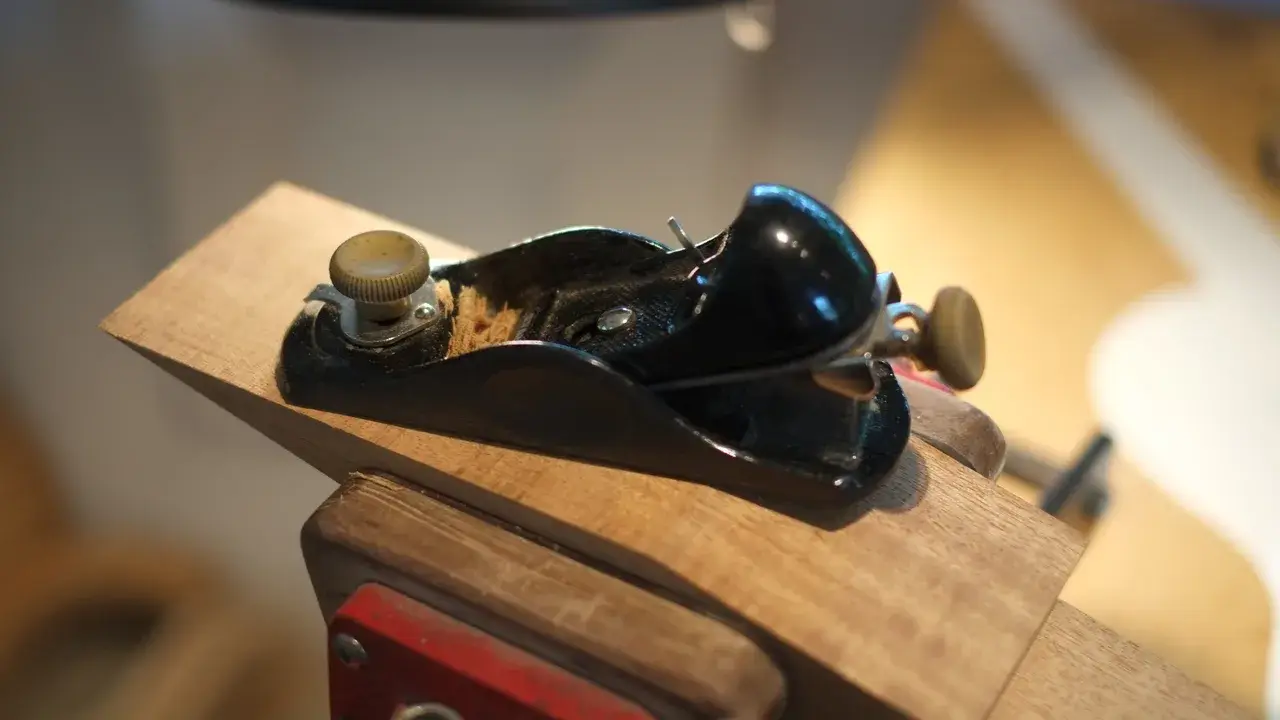
A sharp, square edge looks unfinished on a small gift and chips the first time it is dropped. Two small fixes help. An eased edge is rounded over just a little with sandpaper. A chamfer is a small flat bevel, usually at 45 degrees, cut with a block plane. Both take a few minutes by hand, and on small parts they are often quicker and safer than setting up a router.
Hold the work, not your fingers
Clamp the part in a vise or against a bench stop so both hands are free for the plane. A small part held in one hand while you plane toward it is how knuckles get cut.
Mark two pencil lines
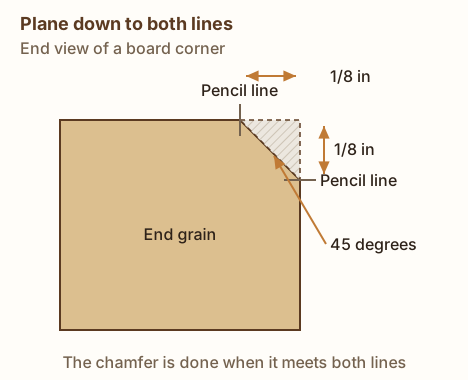
For a chamfer, set a combination square to 1/8 in and draw a pencil line that far in from the edge on both faces that meet at it. The chamfer is done when you plane down to both lines at once. On a small gift such as a key fob or a door wedge, 1/8 in or less looks right; bigger chamfers look heavy.
Plane the end grain first
Set the plane for a very thin shaving and hold it at about 45 degrees to the faces. On end grain, plane from each corner in toward the middle, or the far corner will split off. Do the end grain chamfers first, because any small chip at a corner is then cleaned up when you plane the long grain chamfers.
Swipe sideways to see the whole diagram, or tap it to open full size.
Then the long grain
Plane the long edges with the grain, the same direction you would plane the face without tearout. Take long, even strokes and keep the angle steady. Look at the chamfer under a light: an even stripe means an even chamfer.
Ease the rest with a sanding block
For edges you only want to soften, wrap 150-grit paper around a block and take two or three strokes along each edge at an angle between the two faces. Switch to 220-grit and do one more pass on every edge, chamfered ones too, so they feel the same in the hand. Then move on to finishing.
Get new build ideas by email
Free build ideas and tips by email, about twice a month. We'll send a link to confirm. Our emails are sent by Kit, which tracks opens and clicks so we can see what's useful. Unsubscribe anytime. You must be 16 or older. Privacy policy.