
Shop tip
Reading Grain to Reduce Tear-Out
A quick look at grain direction before you plane or rout — so the cutter slices with the fibers instead of lifting them.
Made in my shop
- Reading time
- About 1 min
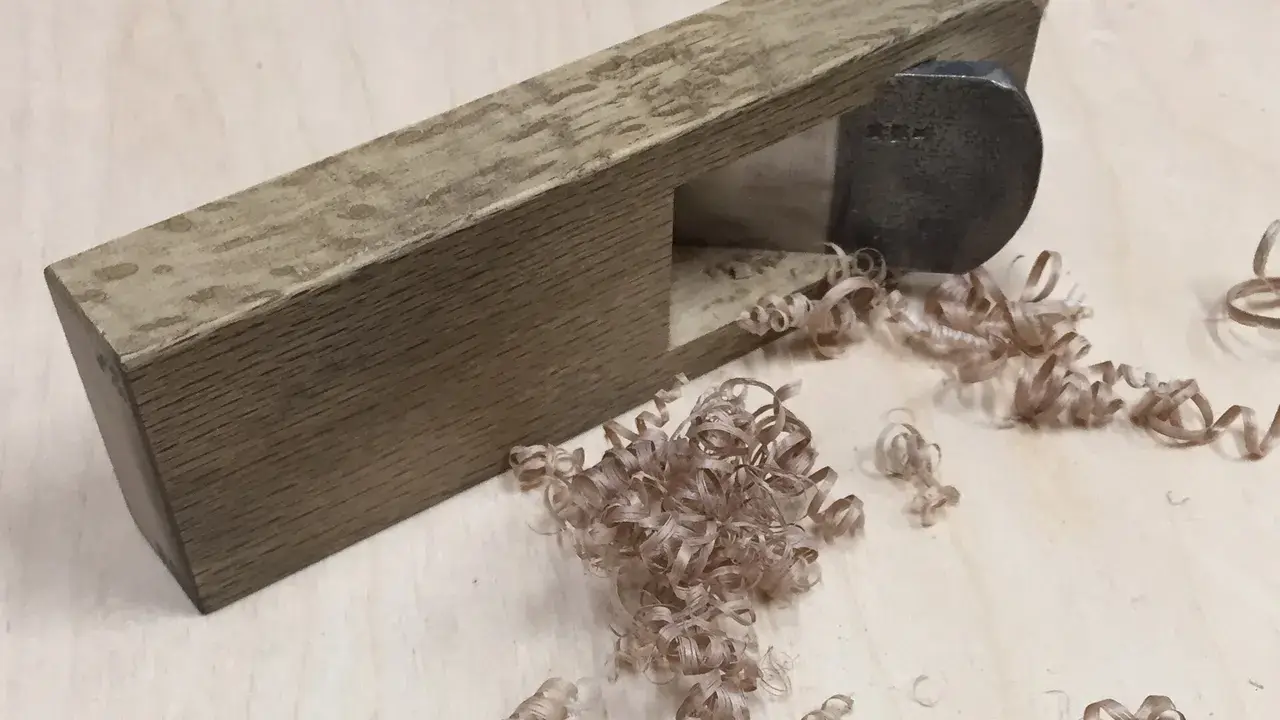
Tear-out happens when the edge lifts fibers instead of shearing them. Reading the grain first is faster than sanding the damage later.
The 10-second check
Look at the edge of the board (not only the face). The grain lines show which way the fibers lean:
- If they rise toward the end you’re planing into, you’re cutting uphill — more tear-out risk.
- Flip the board or reverse your stroke so the plane or bit runs downhill, with the lean.
Swipe sideways to see the whole diagram, or tap it to open full size.
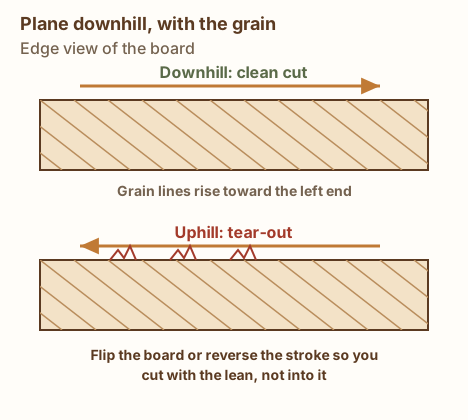
On the face, cathedrals and stripes often tip the same way as the edge grain. When face and edge disagree (wild grain), take lighter cuts, skew the plane, or switch to a scraper / high-angle setup.
Power tools
- Jointer / planer: feed so the knives cut downhill when you can; if one face tears, try the opposite feed on the next pass after you reorient.
- Router: climb cutting is a special case — default to the feed in using a router safely and take light passes on figured wood.
- Table saw: a sharp blade and support under the cut matter more than grain for most rips; tear-out on crosscuts drops with a zero-clearance insert or painter’s tape on the cut line.
When grain is wild
Bird’s-eye, interlocked tropicals, and reversing grain won’t obey one direction. Use a sharp blade, shallow cuts, a scraping plane, or sand to final thickness instead of forcing a deep plane pass. Hone before you chase tear-out with sandpaper — dull edges make every grain mistake worse.
Get new build ideas by email
Free build ideas and tips by email, about twice a month. We'll send a link to confirm. Our emails are sent by Kit, which tracks opens and clicks so we can see what's useful. Unsubscribe anytime. You must be 16 or older. Privacy policy.