
Shop tip
Stop Blocks for Repeat Cuts
Clamp a stop once and cut matching parts without remeasuring — on a miter saw, crosscut sled, or drill press.
Made in my shop
- Reading time
- About 2 min
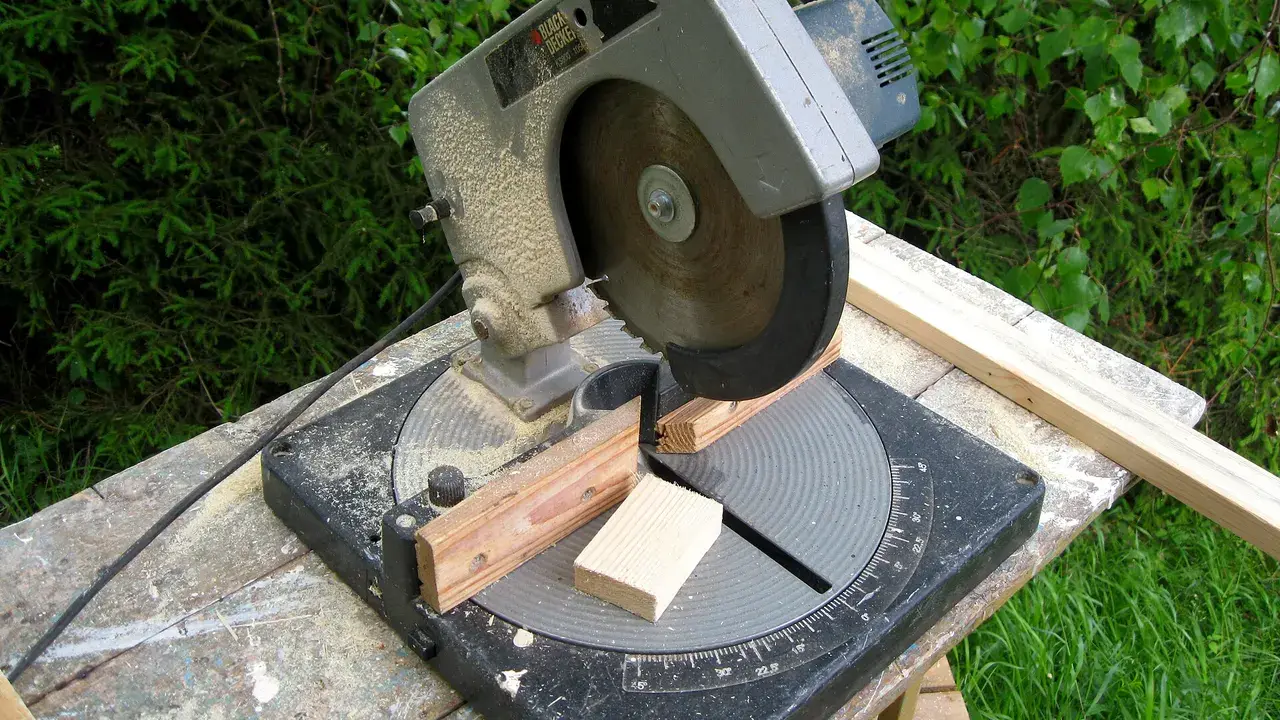
Matching rails, stiles, and shelf pins all start with the same habit: measure once, set a stop, and cut every piece to that stop.
Why a stop beats measuring each piece
Every time you read a tape and mark a new line, you can be off by a hair. A stop block turns length into a physical reference. Parts match each other even if the absolute length is a sixteenth off your sketch — and matching matters more than the number on the page.
Miter saw or chop saw
- Cut one end of the stock square.
- Clamp a block to the fence at the finished length (use a scrap so you don’t cut into a metal fence).
- Butt the squared end to the stop, hold the board down, and cut.
- Keep sawdust from packing against the stop — blow or brush it away between cuts or the parts grow longer.
Never trap a short offcut between the blade and a stop on the wrong side of the cut; think through which side is waste before you clamp.
Swipe sideways to see the whole diagram, or tap it to open full size.
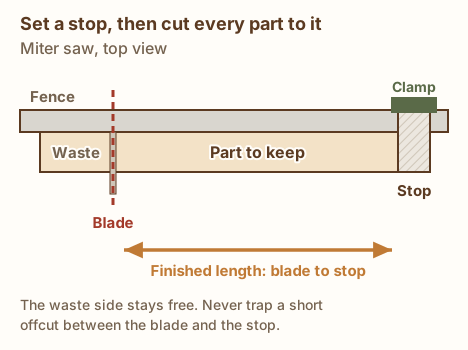
Table-saw crosscut sled
Clamp or screw a stop to the sled fence. Same idea: one reference end against the stop, cut, repeat. For tiny parts, use a hold-down or hot-glue a sacrificial handle so your fingers stay clear.
Drill press and shelf pins
A stop on the fence (or a simple jig with indexed holes) keeps shelf-pin spacing even. Set depth with the drill-press stop collar so every hole is the same depth too.
Quick tips
- Label the stop (“23 1/2 front rails”) if you’ll reuse it mid-project.
- Cut the longest parts first while stock is full length.
- For mirrored pairs, keep face marks consistent — see measuring and marking accurately.
Our tool picks for this tip: Miter saws
Need a drill press? See our drill press picks.
Get new build ideas by email
Free build ideas and tips by email, about twice a month. We'll send a link to confirm. Our emails are sent by Kit, which tracks opens and clicks so we can see what's useful. Unsubscribe anytime. You must be 16 or older. Privacy policy.